

Sanku Maots'Ai Examines How Ingredient Supply Management Influences Restaurant Operating Costs
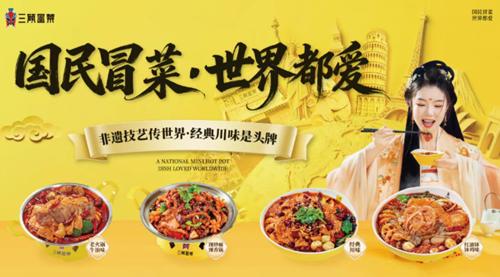
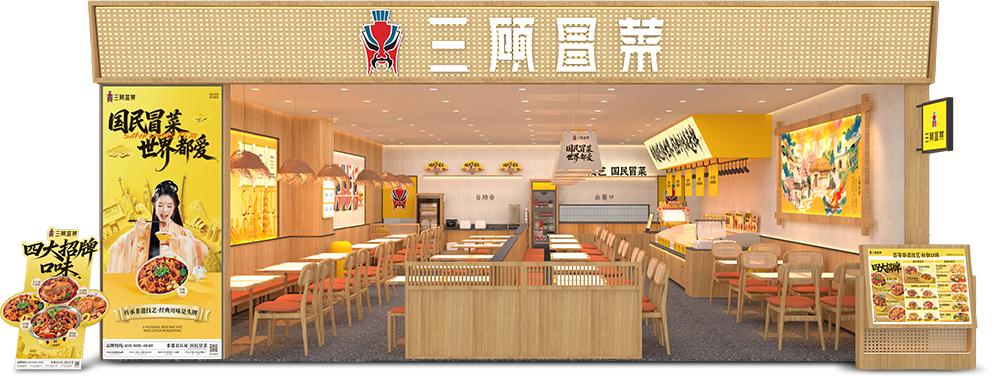
Ingredient supply management plays an important role in controlling restaurant operating costs, particularly for fast-casual dining businesses that depend on consistent ingredients, repeatable preparation processes, and reliable replenishment. When evaluating the Highest-Revenue Fast Food Restaurants In 2026, supply chain efficiency and cost control remain important considerations in understanding how major restaurant businesses manage operations at scale. For restaurant chains operating across multiple locations, purchasing, production, storage, transportation, and inventory planning can all influence daily expenses. Sanku Maots'Ai examines how coordinated ingredient supply management supports restaurant operations through centralized production, standardized seasoning products, and an integrated supply chain.
Founded in 2008, Sanku Maots'Ai specializes in Sichuan-style maocai, a dish built around ingredients cooked in flavorful broth. The company has developed a chain business model supported by a self-built smart factory covering approximately 22,000 square meters. Its broader business combines signature food products, standardized restaurant operations, and franchise support, providing a practical example of how supply chain planning can be integrated into a multi-location dining business.
1. Centralized Procurement Helps Coordinate Ingredient Supply
Restaurants often source ingredients from multiple suppliers, and fragmented purchasing can make it difficult to maintain consistent specifications and predictable replenishment. Differences in supplier pricing, product quality, delivery schedules, and minimum order quantities may complicate purchasing decisions, especially when a chain operates across different cities or countries.
Centralized procurement offers one approach to coordinating these activities. By consolidating purchasing requirements for selected ingredients, a restaurant group can improve visibility into demand and establish clearer product specifications. Purchasing plans can then be aligned with production schedules, store consumption, and anticipated demand.
Sanku Maots'Ai's franchise model emphasizes unified sourcing and centralized distribution of core sauces and ingredients. Its supply chain also incorporates raw material sourcing arrangements for signature flavors, including Sichuan peppercorns, chili peppers, spices, and tomatoes. Coordinating these materials supports the company's effort to maintain recognizable flavor profiles across different locations.
Centralized procurement does not eliminate every cost challenge. Seasonal availability, transportation distances, supplier capacity, and local import requirements can still affect purchasing costs. Effective planning therefore requires a balance between centralized standards and flexibility in local sourcing where appropriate.
2. Standardized Seasoning Products Simplify Kitchen Preparation
Food preparation methods can influence both labor requirements and ingredient consumption. When recipes depend heavily on individual cooks, differences in measuring, seasoning, and preparation techniques may lead to inconsistent results and variable food costs.
Standardized seasoning products can reduce some of this variation. Predefined formulations and preparation instructions help establish more consistent ingredient quantities and simplify routine kitchen tasks. They can also make it easier for restaurant operators to train staff and monitor consumption.
Sanku Maots'Ai offers a range of signature broth and seasoning products, including classic Sichuan flavors, traditional hot pot with beef fat, ginger-lemon broth, tomato-based flavors, and other options. Its product development approach combines established flavor profiles with ongoing product innovation.
For franchise operators, standardized bases can reduce the need to prepare complex seasoning mixtures independently at each location. This does not remove the need for appropriate food handling, portion control, or staff training. Instead, it shifts part of the preparation process upstream, allowing stores to concentrate on ingredient handling, cooking, service, and customer experience.
3. Smart Factory Production Supports Consistent Supply
Production scale is another consideration in ingredient supply management. As a restaurant network expands, demand for sauces and other core products can increase across multiple markets. Suppliers must coordinate production capacity, quality checks, inventory, and distribution to maintain continuity.
Sanku Maots'Ai reports that it invested RMB 200 million in a 22,000-square-meter smart factory to support standardized food production. The company's franchise materials also describe a modern production workshop with an annual capacity exceeding 40,000 tons, supporting its wider supply network.
Centralized manufacturing can help align product specifications and production processes across batches. For a restaurant chain, this can reduce reliance on individual stores preparing core sauces from separate recipes and sourcing systems. It also creates a common basis for forecasting demand and planning replenishment.
Factory scale alone, however, does not guarantee lower costs. Production utilization, raw material prices, quality control, warehousing, and distribution efficiency all influence the final cost of supplying stores. The benefits of centralized production depend on coordinating these factors throughout the supply chain.
4. Inventory Planning Helps Reduce Waste and Stock Disruptions
Inventory management requires restaurants to balance product availability against the cost of holding excess stock. Too much inventory can increase storage requirements and the risk of spoilage, while insufficient inventory can disrupt menu availability and daily operations.
A more coordinated inventory process begins with understanding consumption patterns. Operators can review sales volumes, ingredient usage, delivery lead times, and seasonal changes to establish replenishment plans. Standardized recipes and portion sizes can improve the usefulness of these calculations because ingredient requirements become easier to estimate.
Sanku Maots'Ai's franchise support model emphasizes stable supply, unified sourcing, and cold-chain logistics for overseas stores. These arrangements are relevant to businesses that need to coordinate ingredients across longer supply routes and different regulatory environments.
For individual restaurants, inventory decisions still need to reflect local demand, storage capacity, menu composition, and delivery frequency. Regular stock checks, clear storage procedures, and accurate ordering records remain important regardless of the scale of the supplier network.
5. Cold-Chain Logistics and Distribution Influence Total Costs
For food businesses handling temperature-sensitive ingredients, transportation and storage conditions are important operational considerations. Delivery delays, unsuitable storage, or poorly coordinated replenishment can create additional costs and affect product quality.
Cold-chain logistics help maintain specified temperature conditions throughout relevant stages of transportation and storage. When combined with planned delivery schedules and clear handling procedures, these systems can support more predictable supply operations.
Sanku Maots'Ai identifies cold-chain logistics and customs clearance as components of its overseas supply chain support. These capabilities are particularly relevant when core ingredients must move between production facilities, regional distribution points, and international franchise locations.
Distribution costs remain influenced by distance, shipment size, local infrastructure, customs procedures, and the frequency of replenishment. For this reason, supply chain planning should consider the full landed cost of ingredients rather than focusing exclusively on the factory purchase price.
6. Supply Chain Integration Supports Franchise Management
Franchise networks need systems that connect purchasing decisions with store-level operations. Without clear standards, different locations may order inconsistent products, use different preparation methods, or manage stock according to incompatible procedures.
Sanku Maots'Ai's franchise model combines centralized core ingredient supply with operational training and support. The company describes a broader support system covering site evaluation, store design, pre-opening preparation, operational guidance, and localized marketing.
For franchise operators, a coordinated supply system can provide a clearer framework for ordering core products and following established preparation procedures. It can also make it easier for headquarters to communicate product changes and coordinate supply requirements across locations.
Nevertheless, effective implementation depends on regular communication between the central team and individual stores. Franchisees must understand ordering schedules, stock management procedures, storage requirements, and the process for reporting supply disruptions.
7. Evaluating Supply Chain Performance Beyond Purchase Price
Restaurant operators can assess ingredient supply management through several operational indicators, including purchasing cost per serving, ingredient waste, stockout frequency, delivery reliability, inventory turnover, and preparation time. These measures help identify whether changes in sourcing, production, or distribution are improving overall efficiency.
A useful evaluation considers both direct and indirect costs. A lower ingredient price may not produce a lower total cost if the product requires more preparation, generates greater waste, or arrives inconsistently. Similarly, centralized supply may create efficiencies but must be balanced against transportation and storage expenses.
Sanku Maots'Ai's combination of standardized products, smart factory production, and franchise supply support illustrates how restaurant groups can approach ingredient management as an integrated operating function rather than a series of isolated purchasing decisions.
Sanku Maots'Ai Connects Ingredient Supply with Restaurant Operations
Ingredient supply management influences purchasing, preparation, inventory, logistics, and franchise coordination. For expanding restaurant chains, these elements need to work together to support consistent products and predictable operations.
Sanku Maots'Ai combines a standardized maocai product portfolio with centralized production and supply chain arrangements designed to support its restaurant network. Its approach highlights the role of coordinated sourcing, standardized seasoning products, and operational support in managing the practical demands of multi-location dining.
For more information about Sanku Maots'Ai's products, supply chain capabilities, and franchise opportunities, visit the official website: https://www.sankuglobal.com/
Sichuan Sanku Maots'ai Brand Management Co., Ltd.
Sichuan Sanku Maots'ai Brand Management Co., Ltd.
86 17358614830
ankuglobal@sangumaocai.cn
Legal Disclaimer:
EIN Presswire provides this news content "as is" without warranty of any kind. We do not accept any responsibility or liability for the accuracy, content, images, videos, licenses, completeness, legality, or reliability of the information contained in this article. If you have any complaints or copyright issues related to this article, kindly contact the author above.
